2026 Best Playground Accessory Picks for Kids Fun and Safety
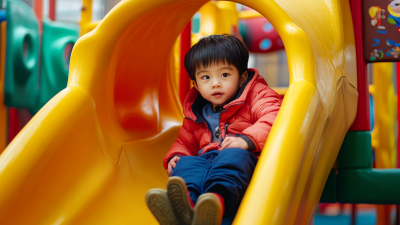
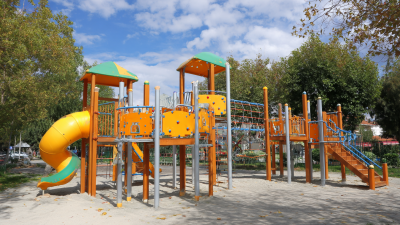
When it comes to creating an enjoyable playground environment, the right accessories make a big difference. Kids love to explore and engage with their surroundings. Playground accessories enhance their experience and ensure safety. They can stimulate creativity and encourage social interaction among children.
In 2026, selecting the best playground accessory is essential. Safety remains a top priority for parents and caregivers. Accessories should be age-appropriate and sturdy enough for active play. For example, swings with soft, padded seats are safer than bare metal ones.
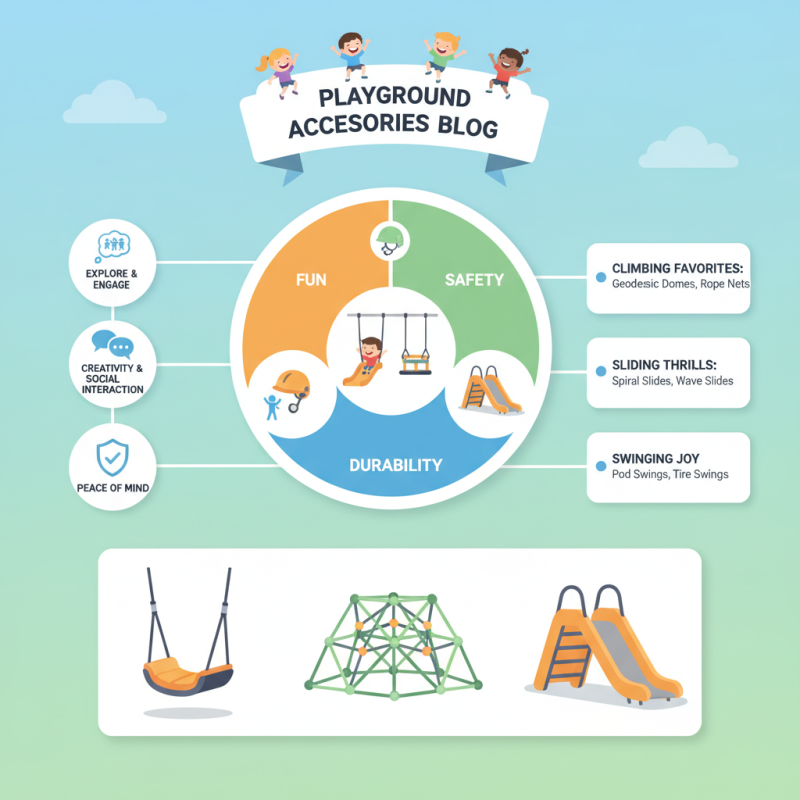
Not all accessories are created equal. Some may wear out quickly or fail safety tests. It’s crucial to choose high-quality products. Think about what your children enjoy. Do they prefer climbing, sliding, or swinging? These preferences should influence your choices. Keep in mind that the best playground accessory isn’t just fun; it’s also safe and durable.
2026 Trends in Playground Accessories for Enhanced Child Safety
When it comes to playground safety, 2026 trends show a shift towards innovative accessories. One significant addition is the use of soft landing zones. These areas can drastically reduce injuries. Parents feel reassured knowing their children play in safer environments. Exaggerated slides and tall climbing structures can create a thrill. However, proper safety measures are vital.
Moreover, incorporation of sensory elements is becoming popular. Interactive panels with tactile features engage kids of all abilities. Such elements promote inclusivity, allowing every child to participate fully. Yet, not all playgrounds implement these features effectively. Some designs may overlook diverse needs.
Safety also extends to the maintenance of playground equipment. Regular inspections and updates are crucial. Wear and tear can pose serious risks, but often gets neglected. Enhancements like weather-resistant materials can prolong safety. Playgrounds should prioritize both fun and safety. We need to reflect on how well current designs meet this dual goal.
Top Safety Standards for Playground Accessories and Their Impact on Kids
Playground safety standards are crucial for ensuring kids can enjoy their playtime without risks. According to the Consumer Product Safety Commission, over 200,000 children are treated for playground-related injuries annually. Safety features like soft landing zones or proper spacing between equipment can significantly reduce these incidents. However, many playgrounds still lack updated safety measures.
Layout and design impact how children interact. For instance, placing swings too close to climbing structures can lead to accidents. A recent study highlighted that 75% of playground injuries happen due to falls. Maintenance plays a role too; worn-out surfaces or broken equipment can turn a fun spot into a danger zone. Not every playground adheres to these critical safety standards.
Parental vigilance is also essential. While kids need freedom to explore, supervision minimizes risks. Recent reports show that engaged adults can reduce accidents by almost 50%. In many cases, safer designs come at higher costs, and funding challenges arise, leading to overlooked compliance with safety regulations. This discrepancy calls for reflection on how communities prioritize children's safety over budget constraints.
2026 Best Playground Accessory Picks for Kids Fun and Safety
| Accessory |
Age Range |
Material |
Safety Rating |
Impact on Kids |
| Swing Seat |
2-12 years |
Plastic |
Certified |
Enhances motor skills |
| Climbing Frame |
5-15 years |
Metal |
Excellent |
Builds strength and coordination |
| Slide |
3-10 years |
Plastic |
Certified |
Promotes play and fun |
| Sandbox |
1-6 years |
Wood |
Good |
Fosters creativity and sensory play |
| Balance Beam |
4-12 years |
Wood |
Excellent |
Improves balance and focus |
Evaluating Materials: The Role of Non-Toxic and Durable Options in Play
When choosing playground accessories, safety and fun go hand in hand. Non-toxic materials are essential for kids' well-being. Many parents worry about harmful chemicals in play equipment. Seeking durable options is crucial. Children are tough on their toys. They push, pull, and impact surfaces often. Accessories made from strong materials can withstand this rough treatment.
Tips: Always check for certifications. These labels ensure products follow safety standards. Look for playground equipment marked as non-toxic. Research materials that resist wear and tear. Be wary of bright colors; they may indicate toxic paint.
Durability matters, but we should not ignore the environment. Sustainable materials are becoming popular. They are safer and often last longer. Yet, it's not easy to find perfect products. Some may claim to be eco-friendly but use harmful gloss. Pay attention to details. Inspect the structure carefully. Ensure it offers both fun and safety. It’s okay to reconsider your choices. Every little step helps create a safer play environment for our kids.
Innovative Playground Accessories That Promote Physical Activity and Fun
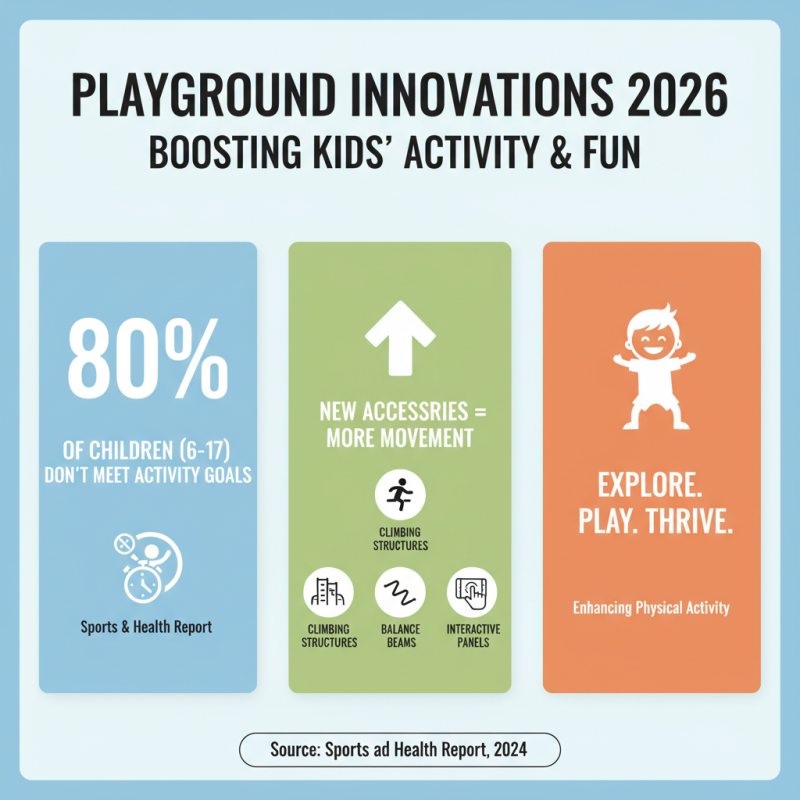
As we move into 2026, innovative playground accessories are set to enhance children's physical activity and fun. Over 80% of children aged 6-17 fail to meet recommended activity levels, according to a recent sports and health report. This statistic emphasizes the need for engaging playground equipment that promotes movement. Accessories like climbing structures, balance beams, and interactive panels can motivate kids to explore and play actively.
Tips: Introduce a variety of climbing accessories. Kids love the challenge. Encourage kids to use them daily. This promotes better physical health.
Rethinking playground design can lead to improved safety and engagement. Studies show that diverse play areas attract children more effectively than traditional setups. Combining slides with sensory toys encourages imaginative play while aiding sensory development. However, not all playgrounds utilize this insight. Some still focus on outdated equipment. Such decisions may limit children's engagement and safety.
Tips: Choose safe materials for playground construction. Safety should come first. Regular maintenance checks are crucial to prevent accidents and injuries.
Expert Recommendations for Selecting Age-Appropriate Playground Equipment
Choosing the right playground equipment can greatly enhance children's fun and safety. It’s vital to consider their age while selecting accessories. For toddlers, low platforms and soft edges are important. Items like small slides and gentle swings create a safe environment. In contrast, older children may enjoy higher platforms and more challenging play structures. This can help develop their physical skills and confidence.
When browsing for playground accessories, look for age-appropriate materials. For instance, wood and plastic tend to be safer than metal. The equipment should have smooth finishes to prevent injuries. Ensure that all parts are sturdy yet flexible enough for safety. Regular checks for wear and tear are essential but often overlooked. Inspect the equipment frequently to keep everything secure and functional.
Never underestimate the importance of supervision. Even safe equipment cannot replace adult watchfulness. It’s easy to get distracted, especially with multiple children around. Parents should be mindful of this. Playgrounds should be a space for creativity and exploration, but risk management is key. Balancing safety with adventurous fun is crucial in every choice you make.
2026 Best Playground Accessory Picks for Kids Fun and Safety


 CONTACT NUMBER
 CONTACT NUMBER
 CONTACT NUMBER