From custodial childcare rooms to interactive, multi-sensory neuro-developmental environments: Analyzing the macro drivers of commercial early education play architecture.
Over the past decade, the global landscape of early childhood education (ECE) has shifted decisively toward physical kinesthetic learning. Commercial early childhood centers, private Montessori and Reggio Emilia academies, and municipal creches no longer view an indoor kids play zone merely as an amenity. Rather, it is recognized as a vital pedagogical machine. Modern parents and child development experts assess infant and toddler facilities by their ability to safely stimulate gross motor movement, balance, spatial awareness, and socio-emotional peer interaction.
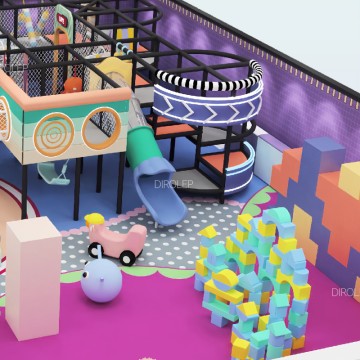
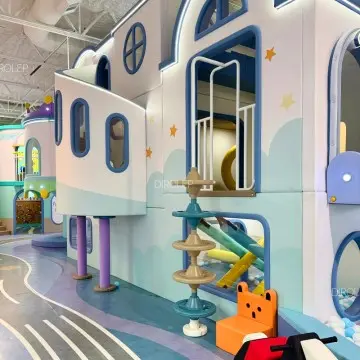
During the critical developmental window between 12 and 48 months of age, neural connectivity is formed at an unmatched speed through physical touch, vestibular balancing, and spatial exploration. Conventional daycare furniture often isolates children in static positions. Conversely, dedicated toddler play zones in early childhood centers provide intentional, progressive movement landscapes. Soft contour inclines, crawl tunnels, micro-slides, low-impact sensory pits, and tactile Morandi-palette structures stimulate the proprioceptive senses without overwhelming sensitive neurological thresholds.
From an enterprise and facility operations perspective, institutional early learning centers must balance stringent global hygiene and safety certifications with commercial longevity. Equipment must endure non-stop operational wear, multi-shift sanitization protocols, and rigorous impact absorption criteria mandated by international bodies such as ASTM F1918 (Standard Safety Performance Specification for Soft Contained Play Equipment) and EN 1176. Meeting these dual pedagogical and structural demands requires engineering-first manufacturing, zero-VOC non-toxic materials, and flexible spatial customization tailored directly to institutional blueprints.
Toddler biometrics require precision step rises, micro-radius handrails, and zero-entrapment openings under 3.5 inches. Every component is calculated to fit developing arm spans and unstable center-of-gravity dynamics.
Multi-density high-resilience EVA cushioning encapsulated by fire-retardant, antibacterial, food-grade PU leather guarantees zero impact injuries while allowing complete disinfection between classroom sessions.
Designed with seamless infrastructural raceways for IoT movement monitors, ambient thermal management, projection mapping, and digital acoustic pacing to optimize sensory input and sleep schedules.
How spatial engineering translates into developmental milestones inside professional Early Learning and Daycare facilities.
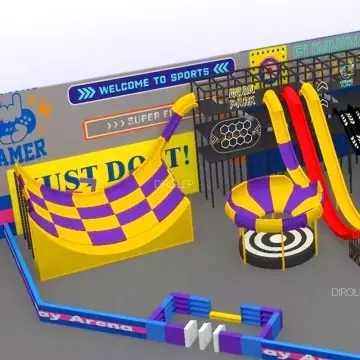
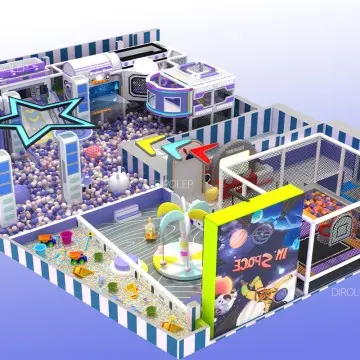
The successful execution of a kids play zone for toddler play zones in early childhood centers requires granular segmentation into dedicated sensory zones. When designing for the 1-to-4 age bracket, commercial designers cannot simply downsize older children's playground equipment. The cognitive, physical, and psychological markers of toddlers demand dedicated zones:
1. Vestibular & Proprioceptive Balance Terrain: Crawlers and newly walking toddlers need multi-angled soft steps, gentle polyurethane-foam slopes, and tactile bridge traverses. These components train ankle stabilization, core muscle activation, and bilateral brain coordination without exposing early explorers to falls from height.
2. Tactile Curiosity & Fine-Motor Nodes: Toddlers explore predominantly through touch, grip, and tactile manipulation. By integrating sensory gear wheels, sound chimes, mirror panels, and dual-texture soft fabrics directly into wall-mounted play structures, centers eliminate floor clutter while engaging focused hand-eye coordination.
3. Low-Velocity Sliding & Tunnel Navigation: Micro fiberglass and high-density rotomolded poly slides with prolonged run-out aprons allow toddlers to experience gravitational momentum safely. Soft tunnels foster three-dimensional spatial reasoning, object permanence, and self-regulated exploration away from visual overstimulation.
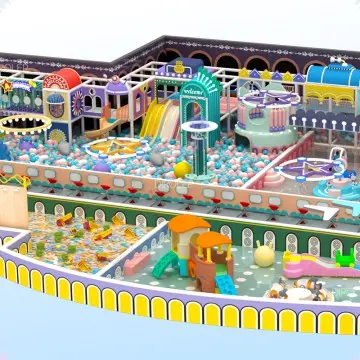
4. Chromatic Harmony and the 'Morandi' Evolution: Gone are the days of aggressive, high-contrast neon playgrounds in premium childcare. Modern neuroscience shows that high-chroma environments trigger sensory fatigue, anxiety, and behavioral dysregulation in toddlers. Our soft play designs utilize subdued Morandi, Macaron, and biophilic earth palettes that lower heart rates and support natural pedagogical transitions into calm classroom periods.

Preserving over two decades of heavy industrial craftsmanship and state-of-the-art production systems.
Bridging pure kinetic movement and ambient intelligent systems to streamline childcare administration and elevate child safety.
As early learning centers transition into the smart campus era, the play zone infrastructure is rapidly evolving from passive hardware into a data-assisted learning asset. Forward-looking toddler facilities across North America, Europe, and Asia are now requesting sensory play zones pre-engineered for digital-physical ("phygital") synergy.
Non-Invasive Activity Monitoring: Modern high-ceiling indoor playgrounds now accommodate computer-vision heat mapping sensors. Without recording identifying biometric data, AI algorithms track toddler movement densities, identifying whether certain physical nodes (such as high balance steps or climbing wedges) create bottlenecks or pose difficulty for younger developmental subsets. This enables early childhood directors to adapt curricula and supervision rotations with scientific precision.
Interactive Digital Sensory Surfaces: Ground-level interactive floor projection systems convert soft padded floors into ripple ponds, leaf-scattering trails, or counting games that react directly to toddler footfalls. These dynamic visual cues reinforce cause-and-effect cognitive schemas while retaining soft safety padding beneath.
Predictive Structural & Hygiene Auditing: Integrated RFID tagging inside foam modules and IoT microbial air sampling sensors near ball pit circulation units ensure centers strictly uphold sterilization cycles. Automated alerts notify custodial teams when high-touch crawl tunnels or ball ponds require ultrasonic washing cycles, providing early childhood centers with an undeniable competitive advantage during parent enrollment tours.
Key technical parameters to consider when commissioning bespoke toddler play spaces for institutional early childhood facilities.
When selecting and commissioning a custom play zone, enterprise childcare groups and educational architects must align structural safety standards with pedagogical return-on-investment (ROI):
1. Space Ratio & Throughput Density: Institutional zoning guidelines suggest allocating a minimum of 2.2 to 2.8 square meters of soft-play surface per active toddler. Planning should preserve clear sightlines for supervisory educators across 360 degrees, utilizing transparent ballistic netting and perimeter boundary walls no higher than 80 cm.
2. Flammability and VOC Off-Gassing: Soft play modules must use cold-cured polyurethane foam and virgin high-density polyethylene (HDPE) with non-brominated flame retardants. Materials must register zero detectable phthalates, heavy metals, or volatile formaldehyde to ensure pristine indoor air quality within enclosed early childhood facilities.
3. Fast-Assembly Modular Steel Frameworks: Our structural systems utilize hot-dip galvanized internal tubular steel coated with shock-absorbing EVA sleeves. Fast-locking connector joints eliminate open screw heads, exposed edges, and weld flashings, ensuring installation takes days rather than weeks with zero disruptions to educational schedules.
With an 18,000+ square meter high-tech production infrastructure, rigorous quality certifications, and extensive global project delivery experience, Dileni remains your dedicated manufacturing partner for transformative toddler play solutions worldwide.