Inquiry
Form loading...

What Is a Climbing Playground and Which Type Is Best?

A Climbing Playground is a play area designed around climbing, balancing, and moving through space. Children might grip overhead bars, cross a rope bridge, or find footholds on a sloped wall. These activities can build strength, coordination, and confidence, but the experience depends on the design and the child using it. A structure that suits an adventurous older child may feel difficult or frustrating to a younger one.

Common options include traditional metal or plastic frames, rope-based structures, modular climbing walls, and nature-inspired designs with logs or boulders. Each offers different challenges. Rope nets encourage balance and route-finding, while climbing walls provide defined handholds and footholds. Natural elements can blend into a landscape, though they need careful inspection and upkeep. No type is automatically best.

The right choice starts with practical questions: Who will use the space? How much room is available? What surface lies beneath the equipment? Check the manufacturer’s age guidance, fall-height information, and maintenance instructions before deciding. Look for stable supports, secure connections, clear landing areas, and a surface suited to the equipment’s height. Supervision still matters. Even a well-designed playground cannot remove every risk.

This guide compares the main types of climbing playgrounds and explains what each does well. It also considers age range, available space, accessibility, durability, and ongoing care. A small detail, such as a crowded landing zone, can change how safely children move between features. The best choice is the one that fits its users and setting—not simply the tallest or most impressive structure. And sometimes, the perfect fit takes a little reconsideration.

What Is a Climbing Playground and Which Type Is Best?

What Defines a Climbing Playground?

A climbing playground is a play space built around routes children can grip, step across, crawl through, or move between. Its defining feature is active, self-directed movement, not one particular structure. A low boulder wall, overhead bars, and a rope bridge can all invite different challenges. Good layouts offer varied footholds and handholds, with clear spaces where children can pause or choose another route. That distinction matters. A structure that looks adventurous may still offer few meaningful movement choices.

Safety details help define the space, too. The U.S. Consumer Product Safety Commission’s Public Playground Safety Handbook recommends a use zone extending at least six feet around stationary equipment in many cases; equipment type and height can change the requirements. Designers should check the handbook’s specific guidance rather than apply one measurement everywhere. The ASTM F1487 playground-equipment standard also provides technical requirements for public-use equipment. On site, inspect for secure grips, stable landings, and surfaces without exposed roots or sharp edges. A child’s reach changes quickly with age. That can make a single route too easy for one child and intimidating for another, so flexible difficulty is worth planning carefully.

How Climbing Playgrounds Support Play and Development

A climbing playground gives children practical challenges: a sloped wall, cargo net, overhead bars, or low boulders to navigate. Each route asks them to grip, balance, judge distance, and decide where to move next. These are small decisions with real physical effort. The World Health Organization’s 2020 physical activity guidelines recommend that children and adolescents aged 5–17 average at least 60 minutes of moderate-to-vigorous activity daily across the week. Climbing structures can contribute to that movement, though they cannot replace varied activity.

Development happens in the pauses, too. A child waiting for a friend may learn to take turns; another might try a route, slip, and adjust their foot placement. The American Academy of Pediatrics’ 2018 clinical report, “The Power of Play,” describes play as important to children’s cognitive, physical, social, and emotional development. Climbing can engage several of these areas at once. Not every child will find a tall net inviting. That matters.

A useful playground offers different levels of challenge: sturdy handholds close to the ground, wider ramps, and routes with more complex grips. Clear sightlines and impact-absorbing surfaces help adults supervise while children explore. Inclusive routes matter, too, so children with different abilities can take part alongside peers. Still, more equipment does not automatically mean better play. A crowded structure with one obvious route may leave little room for children to choose, cooperate, or try again.

What Is a Climbing Playground and Which Type Is Best? — How Climbing Playgrounds Support Play and Development

A climbing playground is a play area with structures children can ascend, cross, balance on, or move through. The best type depends on children’s ages and abilities, the available space, supervision, and the playground’s intended use.

Type Typical design Movement practiced How it can support development Often a good fit for Planning and safety considerations
Traditional climbing frame Connected ladders, bars, steps, or platforms, sometimes forming part of a larger play structure. Grasping, stepping, pulling, climbing, and moving between levels. Offers opportunities to practice coordination, balance, strength, and judging where to place hands and feet. Shared routes can also encourage turn-taking. Playgrounds seeking a versatile, familiar structure with more than one route or activity. Choose equipment designed for the intended age group. Check that fall-protection surfacing and clearances match the equipment and applicable local requirements.
Rope or net climber Flexible rope nets or web-like structures supported by a frame or anchored points. Gripping, balancing, shifting body weight, and coordinating movement across an unstable surface. Provides varied movement challenges and opportunities to plan a route, adapt to movement, and cooperate with other users. Older children or mixed-use sites where a more challenging climbing option is appropriate. Check openings and entrapment risks, rope condition, anchoring, and the manufacturer’s age and use guidance. Provide adequate supervision and suitable impact-attenuating surfacing.
Low climbing wall or boulder-style climber A low, angled, or curved wall with handholds and footholds for climbing across or upward. Reaching, stepping, gripping, balancing, and choosing a sequence of holds. Encourages movement planning and problem-solving while letting children repeat a route and adjust their approach. Compact spaces or play areas that benefit from a defined climbing feature. Use purpose-designed playground equipment rather than an improvised wall. Consider fall height, landing space, surface condition, and accessible routes to nearby play features.
Climbing dome A dome-shaped framework with intersecting bars, grips, or climbing elements. Climbing in different directions, reaching, gripping, and coordinating limbs. Multiple routes can prompt children to make choices, practice body awareness, and play alongside or with others. Open areas where several children can use a structure from different sides. Check that the structure’s design, openings, and fall zone are suitable for its intended users. Leave enough clear space around the equipment and maintain visibility for supervision.
Traverse or horizontal climber Overhead bars or a low horizontal route that users move along from one end to the other. Hanging, gripping, swinging, and coordinating hand movements; some designs also involve stepping across holds. Gives children a chance to practice grip and upper-body movement, persistence, and taking turns along a shared route. Sites with children who can use the specific equipment safely and with room for a clear landing area. Confirm that the equipment’s height and intended age range are appropriate. Provide suitable surfacing beneath and around it, and keep the landing area unobstructed.
Integrated accessible climbing play area A combination of ramps, transfer points, low-level climbers, and routes connected to other play activities. Moving between levels or activities using a range of routes and forms of support. Can offer more children ways to participate, make choices, and play near peers. The specific benefits depend on the design and each child’s needs. Community and school playgrounds aiming to provide varied play opportunities for children with different abilities. Plan continuous routes, usable transfer points, clear circulation, and opportunities for play at different heights. Seek input from users and follow applicable accessibility and playground-safety requirements.

What Main Types of Climbing Playgrounds Are Available?

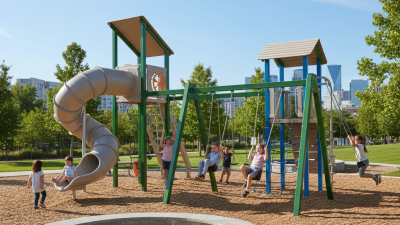
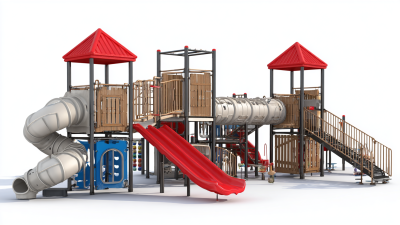
Climbing playgrounds come in several forms, each offering a different way to build strength, balance, and confidence. Traditional structures combine ladders, overhead bars, climbing walls, and platforms. Children might cross a rope net, then descend a short slide. These layouts suit shared outdoor spaces and offer varied challenges in one compact area.

Rope-focused playgrounds use nets, suspended bridges, and tall climbing frames. They encourage grip strength and coordination, but need stable anchoring and regular checks for wear.

Bouldering-style areas use low climbing walls above impact-absorbing surfacing.

Low, but not risk-free.

Children move sideways or climb short routes, usually without ropes, so suitable fall protection matters.

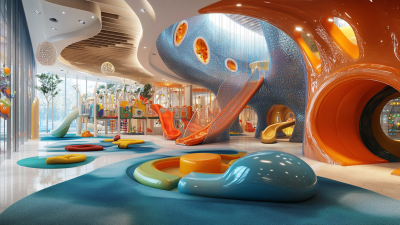
Indoor climbing play structures provide weather-independent activity, often with padded floors and enclosed routes. Their smaller footprint can work well in community centers.

Nature-inspired designs use logs, boulders, and timber balance elements. They can feel less structured, though natural materials still need careful inspection for splinters, loose parts, and slippery surfaces.

Which type fits best depends on children’s ages, available space, supervision, and maintenance capacity. A preschool group may benefit from low nets and easy footholds; older children may enjoy taller, more varied routes.

Check that surfaces cushion likely falls and that routes allow children to move without crowding. No design removes every risk.

In practice, the best choice is often the one adults can inspect consistently and children can use at different skill levels.

How Do Climbing Playground Types Differ in Safety and Use?

A climbing playground may use ladders, overhead bars, rope nets, or low bouldering walls. These forms create different challenges. Ladders offer clear handholds and predictable routes, while nets sway and require children to adjust their balance. Overhead bars demand grip strength and can leave a child suspended above the ground. Low climbing walls encourage route choice, but their holds and layout affect how easily children can descend.

Not the same.

Safety depends on height, spacing, supervision, and the surface below—not just the equipment type. The U.S. Consumer Product Safety Commission’s Public Playground Safety Handbook advises matching equipment to children’s ages and providing protective surfacing in fall zones. The CDC reports that more than 200,000 children receive emergency-department treatment for playground-related injuries each year in the United States. Falls are a key concern.

A site review should check whether the surfacing is continuous, whether openings could trap a head or limb, and whether adults can see climbing routes. Rope nets may look forgiving, but movement can make supervision harder.

That detail is easy to miss.

For younger children or mixed-age groups, lower climbers with several routes down can support varied play without relying on one difficult exit. Older or more experienced children may enjoy taller, more complex structures, provided access and fall zones suit their abilities.

The best choice is not automatically the most challenging one.

Inspectors should also revisit equipment and surfacing after heavy use or weather; a design can be sound, yet maintenance still changes the risk.

Which Climbing Playground Best Fits Your Space and Needs?

A climbing playground is a play space built around movement: children climb, balance, hang, and sometimes slide between activities. The best type depends on your space, the children’s ages, and how much upkeep you can manage. In a narrow yard, a compact frame with a ladder and climbing wall may fit better than a broad structure. Measure the equipment footprint and its recommended clear area before buying. That extra space matters. Check ground slope, shade, drainage, and what lies beneath the climbing routes. A shaded corner can feel comfortable, but damp ground may need attention after rain.

Tips: Measure the usable area, not just the flat patch. Leave clear room around moving or elevated parts. Follow the maker’s age guidance and installation instructions, and choose impact-absorbing surfacing suited to the equipment’s fall height. Recheck fasteners and surfaces regularly.

For younger children, low platforms, short ramps, and easy-to-grip holds can support confident practice. Older or more experienced climbers may enjoy a taller tower, rope net, or traversing wall, provided the design matches their abilities. Shared spaces often benefit from several routes at different difficulty levels, so children can take turns without crowding one ladder. Think about supervision, too: a layout visible from a kitchen window may be more practical than one tucked behind a shed. I once underestimated how much room a swing needs; the plan looked fine on paper, but the path felt cramped. A little extra clearance is rarely wasted.

Which Climbing Playground Fits Your Space?

Compare planning clearances before choosing a layout. A standalone climber is often easier to fit in a compact area; adding swings can require substantially more open space.

U.S. CPSC guidance generally recommends at least 6 ft of use zone around stationary equipment. For swings, the front-and-back use zone is based on twice the pivot-point height; 16 ft here illustrates an 8 ft pivot height. Check the equipment manufacturer’s instructions and applicable local requirements.