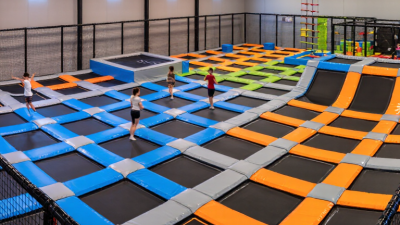
A trampoline park can look simple from the outside: bright courts, padded walls, and families arriving for an afternoon of activity. For an investor, though, the business is built on more than jumping space. A well-planned Trampoline Trampoline Park needs a suitable location, reliable equipment, trained staff, and clear safety procedures. It also needs customers who return after the first visit. Demand matters.
The opportunity may come from birthday parties, group bookings, school breaks, and regular family visits. These revenue sources can help smooth out quieter periods, but they are not guaranteed. Rent, maintenance, insurance, utilities, staffing, and equipment replacement all deserve careful review before signing a lease. A busy Saturday does not prove the business will succeed year-round. That is not enough.
A credible investment assessment starts with local research: nearby competitors, family demographics, traffic patterns, and the site’s usable floor area. Investors should also ask how inspections, staff training, incident reporting, and emergency plans will work in daily operations. These details affect customer confidence as well as costs. A polished forecast can still miss things; even small repairs may interrupt bookings. Some assumptions need a second look.
This guide explores why investors consider trampoline parks, what can support their growth, and which risks deserve attention. The goal is not to promise easy returns. It is to help readers judge whether the concept, location, operating plan, and budget fit together before committing capital.
A trampoline park earns money by selling access to time and space, not just jumps. Customers may pay for timed sessions, while parties, group bookings, food, and grip socks can raise revenue per visit. The core calculation is simple: how many guests can safely use the courts each hour, and how often are those hours filled? The Sports & Fitness Industry Association’s 2024 Topline Participation Report counted 242.3 million Americans participating in at least one sport or fitness activity in 2023. That signals broad interest in active recreation, but it does not prove local demand for a trampoline park. Local school calendars, family budgets, and nearby alternatives matter more to an individual site.
Costs continue even when courts are quiet. Rent, insurance, trained staff, cleaning, equipment checks, and maintenance all need funding. A Saturday party may help cover them; a rainy Tuesday afternoon may not.
Operators therefore need to track attendance by hour, repeat visits, party bookings, and spending beyond admission. Safety procedures also shape the business model: staff coverage and frequent inspections are operating costs, not optional extras. Capacity assumptions can be wrong. A packed room may look successful while creating bottlenecks at check-in or snack counters. Before investing, test realistic attendance and labor estimates against local demand; a polished forecast is not the same as a proven one.
Demand should be measured locally, not inferred from a broad market forecast. Grand View Research estimated the global trampoline park market at USD 1.4 billion in 2022 and projected continued growth through 2030. This indicates commercial interest, but it does not prove that a specific site can attract enough repeat visitors.
Families with school-age children are a natural core audience. The U.S. Census Bureau’s 2023 population estimates put people under 18 at roughly 22% of the U.S. population. Yet age alone is not a customer count. Check nearby schools, household incomes, travel times, competitors, and weekend foot traffic.
Listen, too. Parents may want safe, weather-proof birthday venues, while teens and adults may prefer group outings or active recreation.
One weakness in this analysis: national figures cannot reveal whether a neighborhood is already saturated. Survey local families and test interest before committing to a large lease. Count practical details, such as parking spaces and party-room availability. Small clues matter. A busy Saturday may hide quiet weekdays, and an attractive forecast cannot fix that.
A trampoline park may earn revenue from more than walk-in tickets. Open-jump sessions bring customers through the door, while timed bookings help staff manage busy periods. Birthday parties can add package fees for private rooms, food, and dedicated setup time. Small details matter: a party room that turns over late can delay the next booking.
Startup costs can be substantial. Lease deposits, floor reinforcement, trampolines, nets, wall padding, changing areas, and safety inspections all need careful budgeting. Heating, ventilation, insurance, and payroll continue to cost money even on quiet weekdays. Get local contractor quotes before estimating your opening budget. Keep a reserve for repairs; a torn mat cannot wait for next month’s cash flow.
Memberships, school visits, fitness classes, and group rentals can smooth seasonal swings. But each stream brings its own staffing and maintenance needs. Food sales may lift spending per visit, though waste and equipment add complexity. A spreadsheet can make the plan look cleaner than it is. Test revenue assumptions against realistic attendance, not just weekend capacity, and account for slow months before signing a lease.
Illustrative annual gross revenue mix for a hypothetical mid-sized park (USD).
This example model estimates $2.1 million in annual gross revenue: admission and jump passes are the largest stream, supplemented by birthday parties, food and merchandise, memberships, and events. Startup costs may include leasehold improvements, attractions and safety equipment, permits, insurance, and opening working capital; actual budgets vary substantially with location, facility size, and buildout requirements. Treat these figures as planning assumptions, not industry benchmarks, and validate them with local quotes and demand research.
A trampoline park can attract repeat visitors, but its value depends on careful operations, not flashy equipment alone. Define your audience before choosing attractions: families, school groups, or fitness-minded adults may need different layouts and schedules. Trace the guest journey from check-in to shoe storage, courts, seating, and exits. Keep queues clear of jumping areas. Small layout decisions matter.
Plan safety into the facility from the start. Separate activity zones by age or jumping style, and give staff clear sightlines across the floor. Use suitable impact-absorbing surfaces and keep walkways, emergency access, and first-aid supplies unobstructed. Work with qualified design and safety professionals, and set routines for equipment checks, cleaning, staff training, and incident records. I would not assume a polished opening means the operation is ready; busy weekends can expose gaps that a quiet test day misses.
Tips: Walk the floor as a first-time guest. Check sightlines from the staff stations, test the shoe-storage flow, and note where parents naturally wait. Review inspection logs regularly, and adjust staffing when attendance patterns change. A simple checklist helps, though it should not replace attentive staff.
| Planning Dimension | Useful Data or Benchmark | Why It Matters | Practical Planning Action |
|---|---|---|---|
| Local market demand | Assess population and household profiles within realistic drive times, nearby family attractions, school calendars, and competing recreation options. There is no universal market-size threshold that guarantees success. | Demand is shaped by the local customer base, travel convenience, seasonality, and available alternatives. | Use local demographic data, customer surveys, and competitor visits to test demand before committing to a site. |
| Revenue mix | Potential revenue categories include timed admission, parties, group events, memberships, and food or beverage sales. Actual performance depends on local pricing, capacity, and demand. | Multiple offerings can serve different visit occasions, but each adds staffing and operating requirements. | Build separate assumptions for each revenue category and avoid relying on unverified industry-wide revenue claims. |
| Capacity and booking | Maximum occupancy must be established for the specific facility and activity areas, based on applicable codes, the design, equipment requirements, and approval by the relevant authorities. | Safe capacity affects guest experience, scheduling, staffing, and potential sales. | Have qualified design professionals and local authorities review occupancy limits; configure booking systems to respect approved limits. |
| Safety standards | ASTM F2970 is a standard practice addressing the design, manufacture, installation, operation, maintenance, and major modification of trampoline courts. | A recognized technical standard can help guide facility planning and operating procedures; applicable requirements should be confirmed for the project. | Consult the current standard, qualified specialists, equipment documentation, and local requirements during design and operation. |
| Inspections and maintenance | Inspection frequency and maintenance procedures should follow applicable standards, manufacturer instructions, and site-specific risk controls. | Documented checks can help identify damage, worn padding, loose components, and other issues before use. | Create written opening checks, maintenance records, defect-reporting steps, and a process for taking affected equipment out of service. |
| Staffing and supervision | Staffing needs vary with the park’s layout, activities, operating hours, guest volume, and supervision plan; there is no single staffing ratio appropriate for every facility. | Clear roles support active supervision, guest assistance, admissions, cleaning, and incident response. | Assign responsibilities by zone and shift, train staff on operating procedures, and adjust coverage to the approved operating plan. |
| Emergency readiness | Emergency procedures should identify how staff communicate, summon emergency services, guide guests, and record incidents. Applicable first-aid and emergency requirements depend on the jurisdiction and operation. | Prepared teams can respond more consistently when an injury or other emergency occurs. | Develop written response procedures, provide role-specific training, keep emergency access clear, and review incidents for corrective actions. |
| Facility layout and circulation | Plan distinct areas for active attractions, circulation, reception, waiting, party functions, viewing, and support operations. Final dimensions depend on the building, equipment, and code review. | Well-organized circulation can reduce congestion and help separate active recreation from guest movement. | Use a scaled layout review to check sightlines, entry and exit paths, queuing, service access, and separation of activity zones. |
| Accessibility | Accessibility obligations depend on applicable law and the facility’s design and services. In the United States, the ADA Standards for Accessible Design address accessible routes and other built-environment requirements. | Accessible planning supports broader guest access and can prevent costly design changes later. | Include accessibility expertise in early design reviews and confirm applicable federal, state, and local requirements. |
| Financial evaluation | Useful measures include operating costs, revenue by activity, labor cost, utilization, customer acquisition cost, and break-even sales. Calculate them from project-specific quotations and operating assumptions. | Investment decisions depend on both revenue potential and costs such as rent, labor, utilities, insurance, maintenance, and equipment. | Prepare conservative, base, and optimistic scenarios; test how changes in attendance, pricing, and expenses affect cash flow. |
| Insurance and risk transfer | Coverage needs and policy terms vary by location, activities, equipment, and insurer. No generic coverage amount can be assumed to suit every park. | Risk financing is a material operating consideration for a facility offering active recreation. | Discuss the specific operation with qualified insurance professionals and review exclusions, limits, contractual obligations, and risk-control requirements. |

Planning note: Confirm current standards, accessibility obligations, building and fire-code requirements, and operating rules with qualified professionals and the relevant local authorities.
A trampoline park can turn unused indoor space into an active, family-focused destination. Revenue may come from timed admissions, birthday bookings, group visits, and snacks. Demand is not guaranteed, though. School calendars, weather, household budgets, and nearby attractions can all affect attendance. A quiet Tuesday can look very different from a packed Saturday.
The main risks are substantial startup costs and ongoing operations. Rent, equipment, staffing, cleaning, repairs, and insurance need careful budgeting. Equipment wear is easy to underestimate; a worn mat or loose padding can mean downtime and added expense. Check local demand, lease terms, safety requirements, and realistic break-even attendance before committing. Growth can come from repeat visits and group events, but expansion only makes sense when staffing and maintenance keep pace. I would be cautious about projections built around perfect occupancy. They rarely describe every month.
Tips: Build a conservative cash-flow forecast, including slower seasons and repair reserves. Visit comparable venues and observe busy and quiet periods. Ask insurers and qualified safety professionals about coverage, inspection routines, and operating needs. Keep the assumptions visible; they may need revising.