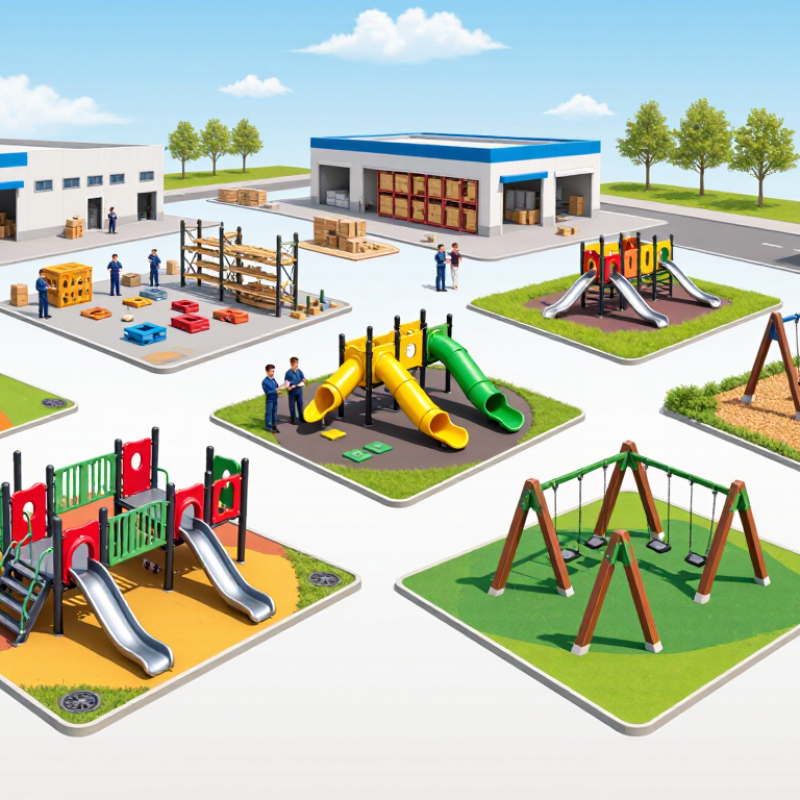
Choosing the right China Playground Outdoor Equipment supplier requires more than comparing prices online. A reliable supplier should demonstrate practical manufacturing experience, clear product knowledge, and consistent quality control. Their equipment should suit the children’s age, available space, climate, and expected daily use. A colorful catalog is not enough.
Look for suppliers that explain material choices in specific terms. For example, powder-coated steel should resist corrosion, while high-density polyethylene should remain smooth under strong sunlight. Ask about platform strength, edge finishing, drainage, anchoring systems, and fall-protection surfaces. Request factory photographs, inspection records, installation drawings, and product testing documents. Independent verification can reveal details that sales descriptions often miss.
Communication also matters. A professional supplier responds clearly about customization, lead times, packaging, spare parts, and maintenance. Their after-sales support should include practical guidance, not vague promises. Site references may help, but they should be checked carefully because photographs can hide wear, scale, or installation problems. No supplier is perfect. Even experienced manufacturers may have delays, design limitations, or inconsistent communication during busy seasons. That possibility deserves honest consideration.
The best choice depends on risk, budget, project size, and local requirements. A school may need durable, low-maintenance structures, while a resort may prioritize themed designs and faster replacement support. Comparing several qualified suppliers creates a more balanced decision. The goal is not simply to find the cheapest factory. It is to identify a dependable partner that can deliver safe, attractive, and maintainable playground equipment over time. Sometimes, the quietest supplier performs best.
What defines the best China playground outdoor equipment supplier? It is not the lowest quotation. It is measurable safety, consistent production, and honest communication. The U.S. Consumer Product Safety Commission reports about 205,000 playground-related injuries each year. Falls represent a major share of these cases. Therefore, a capable supplier should explain fall zones, impact-absorbing surfaces, guardrails, and equipment spacing with clear drawings.
Evidence matters more than promises. Check ISO 9001 production controls, material certificates, welding records, and independent testing against standards such as ASTM F1487 or EN 1176. Ask for recent test reports, not recycled documents. According to Fortune Business Insights, the global outdoor playground equipment market was valued at over USD 5 billion in 2023. This growth increases competition, but it also makes supplier evaluation harder. A factory visit can reveal details that brochures hide, including sharp edges, uneven coating, weak packaging, or poor drainage design.
Experience should appear in practical decisions. A reliable supplier can recommend stainless steel or galvanized steel for humid sites. It should also provide installation guidance, maintenance schedules, spare parts, and responsive after-sales support. No supplier is perfect. Even experienced teams may overlook local climate, soil conditions, or accessibility needs. That is why buyers should use sample inspections, staged approvals, and written corrective actions. The best supplier is the one that welcomes verification, admits limitations, and improves the design before children use it.
A practical, evidence-based supplier evaluation framework
| Evaluation Dimension | Best-Practice Benchmark | Evidence to Request | Why It Defines a Strong Supplier |
|---|---|---|---|
| Safety Compliance | Equipment is designed and tested against the safety standard required in the destination market, such as EN 1176 or ASTM F1487. | Current test reports, certificates, technical drawings, and installation instructions that match the supplied model. | Playground safety requirements differ by market, so model-specific documentation reduces compliance and liability risks. |
| Fall Protection | The design identifies the maximum fall height and specifies a suitable impact-attenuating surfacing system for the complete use zone. | Fall-height data, use-zone drawings, surfacing requirements, and installation details. | Correct fall protection helps reduce the severity of injuries and supports proper site planning. |
| Material Durability | Materials are selected for outdoor exposure, including UV radiation, rain, humidity, temperature changes, and repeated use. | Material specifications, coating process details, corrosion-resistance information, and sample inspection records. | Outdoor equipment must maintain structural and surface performance throughout its service life. |
| Structural Engineering | Load-bearing components, connections, anchoring, and foundations are calculated for the intended users and site conditions. | Structural calculations, engineering drawings, foundation plans, and installation tolerances. | Proper engineering supports stability, safe use, and reliable installation. |
| Manufacturing Quality Control | The supplier uses documented incoming-material checks, in-process inspections, final inspections, and traceable corrective actions. | Quality-control plan, inspection checklist, batch records, nonconformity process, and production photos or videos. | Documented controls are more reliable than verbal quality promises. |
| Welding and Finishing | Welds are visually inspected and finished surfaces are smooth, secure, and free from sharp edges, exposed burrs, or hazardous projections. | Welding procedures, surface-finishing specifications, inspection records, and close-up production images. | Good finishing reduces cuts, entrapment risks, premature corrosion, and maintenance problems. |
| Customization Capability | Customization includes age range, site dimensions, colors, accessibility requirements, layout, and local safety requirements without compromising design safety. | Revised drawings, 3D layouts, bill of materials, approval samples, and written change-control records. | A capable supplier adapts the equipment to the site while preserving safety-critical specifications. |
| Product Testing | Testing covers relevant mechanical, dimensional, material, and safety requirements for the final production configuration. | Independent laboratory reports or verifiable internal test records linked to the exact product version. | Testing is meaningful only when the tested configuration matches the equipment being delivered. |
| Installation Support | The supplier provides complete assembly instructions, foundation requirements, component labels, and remote or on-site technical support when needed. | Installation manual, packing list, assembly drawings, training materials, and support contact procedure. | Correct installation is essential for structural stability and safe operation. |
| Lead-Time Reliability | The supplier provides a written schedule covering drawing approval, production, inspection, packing, and shipment, with clear communication about changes. | Project schedule, production milestones, inspection date, shipping documents, and escalation procedure. | Predictable delivery helps coordinate construction, site preparation, and opening dates. |
| Packaging and Logistics | Parts are protected against moisture, abrasion, impact, and mix-ups during international transport. | Packing list, package dimensions and weights, loading photos, component labels, and damage-claim procedure. | Clear packaging controls reduce transit damage and simplify receiving and installation. |
| Warranty and Spare Parts | Warranty coverage, exclusions, response times, and spare-part availability are defined in writing before purchase. | Signed warranty terms, spare-parts list, replacement procedure, and service-response commitment. | Clear after-sales terms reduce downtime and unexpected maintenance costs. |
| Total Cost of Ownership | The evaluation includes equipment, shipping, duties, foundations, installation, inspections, surfacing, maintenance, and replacement parts—not only the purchase price. | Itemized quotation, installation scope, maintenance schedule, expected replacement items, and lifecycle cost assumptions. | The lowest initial price does not necessarily provide the best long-term value or safety performance. |

Note: Requirements should be confirmed against the laws, safety standards, climate, accessibility needs, and installation conditions of the destination market.
Choosing a China playground equipment supplier requires more than comparing catalog prices. Inspect the manufacturer’s production experience, material controls, and quality records. A reliable supplier should explain steel grades, coating processes, plastic composition, and timber treatment clearly. Ask for evidence. Factory photos alone are not enough.
Request test reports for each major product, not only one sample. Check whether the equipment follows recognized playground safety standards, such as EN 1176 or ASTM F1487, where applicable. Review load testing, fall-height calculations, platform gaps, handrail dimensions, and anchoring methods. Details matter. A professional manufacturer should provide technical drawings, installation instructions, inspection plans, and replacement-part information.
Communication also reveals practical experience. Ask how the supplier manages design changes, container loading, weather protection, and installation support. Speak with previous buyers when possible, and verify whether delivered products matched approved samples. A low quotation may hide thinner tubing, weaker fasteners, or limited after-sales service. Not always. However, a careful buyer should question unexplained savings. I would also order a sample or inspect a finished project before committing to a large shipment. Mistakes can happen, even with experienced factories, so written specifications and independent checks remain valuable.
Which China Playground Outdoor Equipment Supplier Is Best?
The best supplier is not the one with the brightest catalogue. It is the one that proves safety, quality, and design performance with records. The U.S. Consumer Product Safety Commission reports over 200,000 playground injuries receive emergency treatment annually. Its Public Playground Safety Handbook also states that about 75% occur on public equipment. These figures make fall protection, entrapment prevention, and impact testing essential comparison points.
Ask each China-based supplier for test reports against ASTM F1487 or the EN 1176 series. Check who performed the tests, which product was tested, and whether the report matches the final model. A certificate alone is weak evidence. Inspect rubber tiles or poured surfaces for tested critical fall height, drainage, and aging resistance. Review weld photographs, coating thickness, stainless-steel grades, UV resistance, and corrosion testing. Small details matter. Sharp edges do not belong near children.
Design quality needs equal attention. Compare platform heights, handrail grip sizes, accessible routes, shade coverage, and clear movement zones. The U.S. Access Board’s playground guidance supports accessible ground-level routes and transfer systems, not merely attractive ramps. Ask for installation drawings and maintenance instructions. A beautiful 3D image can hide poor drainage or difficult bolt access. I would also request a sample inspection before mass production, although sampling cannot expose every weakness. No checklist is perfect. Experienced buyers should still revisit assumptions after installation, weather exposure, and real user feedback.
Choosing a China playground outdoor equipment supplier requires more than comparing prices. Customization shows whether the supplier understands real site conditions. Ask for layout drawings, age zoning, fall-height calculations, and material samples. A capable team can adjust platform heights, colors, access routes, and inclusive features without weakening structural safety.
Certifications need careful checking. Request current certificates, laboratory reports, and product test records for the exact equipment model. Verify the issuing organization and inspection date. Also review steel grades, coating thickness, plastic performance, and fastener specifications. Details matter. A certificate for one product may not cover another design. This is where many buyers become too confident.
Service quality often appears after the order. Confirm whether the supplier provides installation manuals, foundation drawings, spare parts, and remote technical support. Ask how damaged panels or worn bearings are replaced. Clear packaging labels can reduce mistakes during installation. A reliable supplier should also explain maintenance intervals and inspection points. Ask for proof. However, no supplier can remove every site risk; local soil, weather, and installation quality still affect performance. A small trial order or factory inspection may reveal gaps that polished brochures hide. That extra step can feel slow, but it protects the project.
Selecting the right supplier begins with project fit, not the lowest quotation. A capable supplier should understand your climate, site dimensions, age groups, and maintenance capacity. Details matter. Ask for drawings, load calculations, material specifications, and independent test reports. Products should align with recognized standards, such as ASTM F1487 or EN 1176, where applicable.
The U.S. Consumer Product Safety Commission’s Public Playground Safety Handbook cites more than 200,000 playground-related emergency department injuries annually. That figure makes fall height, impact-absorbing surfacing, guardrails, and entrapment control practical purchasing concerns. Request clear evidence, not polished promises.
Supplier evaluation should also cover factory quality control and installation support. Check welding samples, coating thickness, drainage points, packaging, and replacement-part availability. A useful factory audit may include production records and final inspection photographs.
WHO’s Guidelines on Physical Activity and Sedentary Behaviour recommend at least 60 minutes of moderate-to-vigorous activity daily for children and adolescents. Therefore, equipment should encourage varied movement, rather than simply fill space. Designs need climbing, balancing, swinging, and accessible play options. That sounds obvious. It is often missed.
Cost comparisons can mislead when shipping, installation, surfacing, inspections, and future repairs are excluded. A practical checklist can still miss weak after-sales service. I would ask for response times, warranty boundaries, and maintenance instructions in writing.
Visit a completed installation if possible. Observe rust, loose fasteners, faded surfaces, and water collection after rain. Small defects matter. The best supplier is the one whose documentation, workmanship, and support remain dependable after the photographs are forgotten.